Conservation plans
What are Conservation Plans and Conservation Statements?
One of our best-known services, a conservation plan (also called a conservation management plan), is a document designed to help you understand the history and significance of your heritage asset. It also provides a set of policies to assist you in managing and making decisions about the future of your site. Conservation plans are particularly useful if your site contains multiple listed buildings.
A conservation statement is more concise than a conservation plan and is more open-ended regarding the future of your site. We can work with you to determine which option best suits your project and needs
What is in a Conservation Plan?
At a basic level a conservation plan will describe:
- Your heritage asset and its history.
- Why it is important by setting out its significance.
- Its current condition and future needs.
- How to care for the heritage asset in the future in the form of a useful set of policies.
It is important to remember that every heritage asset is unique, and every conservation plan we create is tailored to your specific site and needs.
Our conservation plans are richly illustrated and include diagrams showing historical phasing and areas of significance. We can also produce gazetteers, options appraisals, and consider feasibility as part of the project - every site requires a different approach.
We have produced a variety of conservation plans for a wide range of clients, including heritage bodies such as Historic Environment Scotland, Historic England, the Historic Environment Division in Northern Ireland, as well as the National Trust and the National Trust for Scotland. We have also worked with large estates in England and Scotland, developers, and private clients. Each conservation plan has been customised to their specific needs in terms of scale and detail.
For you, the conservation plan will provide a framework for planning conservation works, implementing changes, or, depending on the site, improving public access and engagement.
Why do you need a Conservation Plan?
If you’re planning on making changes to your site in the coming years, a conservation plan is useful as it will identify areas that are particularly special and should be preserved, areas that require conservation, and areas where there is potential for change. It can also form part of an application for Heritage Grants.
Conservation plans are also helpful if your site contains different types of heritage assets. For example, you may have a site with multiple buildings set within landscaped grounds, with potential for below-ground archaeology. Having one integrated plan ensures that all issues and overlapping priorities are considered collectively.
Ultimately, a conservation plan will consolidate your existing knowledge and management procedures for the entire site. It will then build on these and provide recommendations for moving forward. The plan aims to preserve what is most special about your site and identify opportunities for the future.
Thinking of commissioning a Conservation Plan?
We would love to work alongside you and develop a conservation plan which recognises the importance and needs of your heritage asset.
Even if you’re not sure if you need one or what type of document is right for you, reach out to us as we are always happy to provide you with advice and guidance
Contact us at admin@simpsonandbrown.co.uk to work with us or for more information
Case studies:
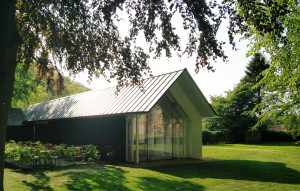
Rievaulx Abbey
The new visitor centre and museum at Rievaulx Abbey, for English Heritage, saw the complete remodelling and extension to the existing facilities within the highly significant and historic context of Rievaulx Abbey.
Find out more →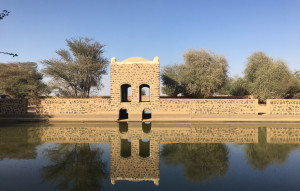
Darb Zubaydah Sites
The Darb Zubaydah is the first pilgrimage route from the east towards the holy cities of Makkah and Medinah. The project involved the production of major Conservation Management Plans for three stations on the historic pilgrimage route. The work was needed as part of the UNESCO nomination for the Darb Zubaydah World Heritage site.
Find out more →
Dalkeith Palace
Award-winning conservation plan for A-listed major mansion house in a designated designed landscape. It comprised considerable archival research and extensive archaeological historic building recording.
Find out more →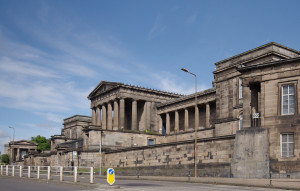
The Royal High School
The conservation plan commissioned to support the re-development of the former Royal High School into the National Centre for Music.
Find out more →
Lindisfarne Castle
A conservation plan written by Simpson & Brown for Lindisfarne Castle in Northumberland, on behalf of the National Trust.
Find out more →
University of Glasgow
An Estate Conservation Strategy produced by Simpson & Brown for the University of Glasgow, detailing the historical development and architectural character of the estate.
Find out more →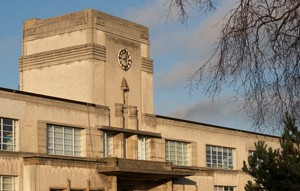
Kelso High School
A conservation statement for Kelso High School, an early twentieth century building designed by Reid & Forbes. Part of a wider feasibility study for Scottish Borders Council.
Find out more →
Gibside
A conservation plan written by Simpson & Brown for Gibside on behalf of the National Trust
Find out more →
Seaton Delaval Hall
Seaton Delaval Hall is one of the most important Baroque houses and landscapes in Britain. Simpson & Brown were appointed by the National Trust to write a comprehensive CMP for the hall, collections and wider estate.
Find out more →
University of St Andrews
A conservation plan written by Simpson & Brown for the University of St Andrews North Haugh campus. Concentrating on James Stirling's category A-listed Andrew Melville Hall.
Find out more →
Kinross House
A conservation plan written by Simpson & Brown for the William Bruce-designed Kinross House.
Find out more →
Place of Paisley
A conservation plan written by Simpson & Brown for Paisley Abbey concentrating on the Place of Paisley. This will assist in a future project to enhance the visitor facilities.
Find out more →
Wallington Hall
A Conservation Management Plan on behalf of The National Trust for this Grade I listed mansion set in its designed-landscape, near Cambo, Northumberland.
Find out more →
Gartnavel Royal Hospital
A conservation audit to assess the historical development and significance of the , Gartnavel Royal Hospital, designed by the noted Glasgow architect Charles Wilson.
Find out more →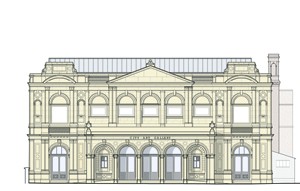
York Art Gallery
A conservation statement commissioned by the York Museums Trust as part of a masterplan for the gallery and surrounding site.
Find out more →
St Margaret's, Oatlands
A conservation plan written by Simpson & Brown for St Margaret's, Oatlands, on behalf of the Glasgow Building Preservation Trust.
Find out more →
Mint Yard, York
A conservation plan written by Simpson & Brown for Mint Yard, York, on behalf of the City of York Council.
Find out more →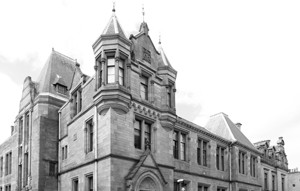
Dunfermline Carnegie Library
A conservation management plan for Dunfermline Carnegie Library, the first Andrew Carnegie-funded public library in the world.
Find out more →


Canongate Housing
A conservation statement for housing in the Old Town of Edinburgh designed by Sir Basil Spence.
Find out more →